Why did Tyler lash out at Ally just before the boardroom scene? ("Do you think you can take care of yourself..for just an hour?").
Friday, July 9, 2010
Remember Me Discussion Group
Why did Tyler lash out at Ally just before the boardroom scene? ("Do you think you can take care of yourself..for just an hour?").
Entertainment Focus.com chooses Remember Me as Top Film
Entertainment Focus.com has choosen Remember Me as the Top Film for the first half of 2010.
For their list, please click here:
Entertainment Focus.com
Thursday, July 8, 2010
Remember Me DVD Sales
The Remember Me DVD was third in sales for the week ending June 27th. (behind The Green Zone and The Book of Eli) The DVD sold 199,034 units for $3,779,655.
Source:
The Numbers.com
Monday, July 5, 2010
Music in “Remember Me” -The Marcelo Zarvos Score-
by Jessegirl

The instrumental music written for the film “Remember Me” is an exquisite achievement. It is used with subtlety from beginning to end, and moves us through the story with unassuming delicacy. It supports instead of being intrusive. The score sets the mood yet never overwhelms it, and works on the subconscious mind more powerfully because of this. The technique is almost cunning seduction, trapping us in emotions the actors have set in motion. We are mostly unaware of this process. It is a rich tapestry of sound.
The only exception is the Requiem—I Know You Can Hear Me—which ends the film. This piece, a frank tribute, can only honour the dead and express grieving with enormous majesty. Zarvos was astute enough to know that the end of the story demanded undiluted yet authentic grandeur. And he delivered, with a hauntingly beautiful melody.
Marcelo Zarvos is a Brazilian pianist and composer, making a name for himself in indie films. He has worked with Allen Coulter on Hollywoodland. The extensive use of his primary instrument is evident in “Remember Me”
“Caroline” and “Tyler”
Caroline’s motif is not the light-hearted tune we’d expect for a child. It has dainty moments, the skipping piano, the fragile harp, but the serious child with issues is uppermost. In the music we can see this solemn girl who zones out and escapes to her own world. It is a sad theme for a pre-adolescent child and illustrates her sensitivity. Caroline is a reflective girl, an observer who seems to laugh like a regular child only with her brother.
Tyler’s theme contains heavily plucked strings, a thudding piano, a plodding cadence. The whole thing is suffused with absorbed reflection. One can almost see Tyler in the diner scribbling in his journal, lost in his thoughts. The music illustrates Tyler’s near constant state of preoccupation. Although he is not an introvert, he is held in the formless yet dense grip of introspection. The music both demonstrates Tyler as a figure mourning his brother and his broken family and also foreshadows his own death. You cannot see this film more than once without being alert to this coming doom, both musically and visually, through constant clues. The effect is devastating because as you watch Tyler slowly come to life and come out of the shadow of his brother’s death, you know he is moving closer to the death fate has in store for him.
“Morning Montage”
The morning of...
We follow Tyler out of the apartment. Then we see all the other characters and how they start the morning of September 11th. They are all happy or more contented than we’ve seen them through the whole movie. Especially Tyler. The piano and that little flute [?] follow him rather trippingly, almost skipping, a light, sweet but not saccharine melody. Again, intermittently and rarely, tiny musical phrases of sadness break through. The sad and the sweet mingle strangely. We don’t really know yet. We follow the characters, especially Tyler, his face smiling, his body lithe and free, as the piano notes bring him closer to his destination. The score is a light, delicate touch, stroking us. Fingers gentle on the keys, almost happy. But our hearts are beating faster, as the ‘clues’ unfold relentlessly. Tyler in the elevator going to the 90th floor. His father uncharacteristically taking Caroline to school, and being twenty minutes behind schedule because of it. The final clue written on the chalkboard. And now we know.

Then he enters his father’s office and three ominous notes—some kind of low horn sound—usher Tyler in. The piano has slowed down and the ‘horn’ and those three notes keep repeating. And what is Tyler’s demeanour as these foreboding notes intrude? He is full of grace, his body slowly inhabiting the office, nibbling on a small treat—last meal of the condemned—and as he sits at his father’s chair, he sees his father’s love in frame after frame in family photographs. His face becomes more and more serene as he realizes the meaning of the screensavers. At the end, Tyler’s face bears the glow of ineffable beauty, the kind love reveals. He interacts with Janine, calm permeating him entirely. Touches her arm in tender camaraderie. Gets up. Moves towards the window, a quiet peace evident in his whole being, his body unhurriedly approaching the window to look out at the blue sky.
Those three ominous notes are at odds with Tyler’s tranquility. They would be strange if we hadn’t noticed the clues because they do not mirror his insouciance. They seem like the underlying perversion, the lie interfering with our now carefree boy. He is oblivious. He cannot hear them as we do. He only knows that he is loved. And that is enough.
By now our hearts are thumping wildly. We are paralyzed. We know. We hear. And, as the camera slowly zooms out to reveal his location, those three notes, sounds heralding doom, stretch back slowly with the camera, and finally the visual and the musical merge. There is a moment of silence, a pause before destiny careens in. Then cacophonous city sounds emerge and grow louder, a harsh racket mocking Tyler’s calm.
And then both sight and sound are taken away from us; the screen goes blank. Our hearts have stopped.
“I Know You Can Hear Me”: The Requiem
The bell tolls. It tolls for Tyler. It tolls for the many who died that day in those buildings. The requiem has begun. What else could come after the blank screen? Only this. Strings, muted horns, piano all proceed at a funereal pace at first, measured out in heartbreaking increments. This is when Tyler’s loved ones realize he is gone and it is time suspended in numbing recognition. His journal in the ashes is symbol—for it would not have survived ground zero—and is the visual for Tyler’s voice-over, his last words. Words from the dead. His voice rang so pure, so the Greeks would say. The music and the voice-over are both heart-rending without once being over the top, as so many Hollywood end pieces tend to be. And because of that, the exquisite melody is even more effective, as we absorb the gut-punch of pain. Tears come for many, but we have not been jerked around. We have been led, expertly, down the road of tragedy. And that is quite different.

Then the requiem deepens, as it must, sombre horns permeate every note. Everything slows down as if time has stopped. We see the characters’ grief. But we also see them continuing with their lives. Nothing is the same. Two three note sequences repeat and they tell us, point blank, that sorrow must rule now. He is gone and nothing is the same. And Tyler’s fingerprints on his loved ones have changed each of them. They forge new bonds, Caroline and her Dad at the museum. Aiden, his arm now tattooed with Tyler’s name, has become studious. They continue to work, as Diane does, carrying with her the devastating pain that comes with losing two sons, yet bravely carrying on. Tyler’s life changed them all forever.
Another musical shift comes when the piano pounds out in triumph as we follow Ally onto the subway train. She sits there, pensive, but that piano, like Tyler’s last smile, is inside Ally now. Her own serene smile echoes his. He is inside her. The piano is used like percussion, insistently hammering, as if it were Tyler’s own beating heart.
Finally, as the subway train blurs, we leave Ally as she continues her own journey, the piano keys are hit harder and harder, the whole melody is interwoven more emphatically. It is almost exultant, but not quite. Hollywood would present trite victory; Zarvos gives us the bittersweet reality. The score during the end credits is real enough for us to know that the angels taking Tyler do so with sad finality, knowing under any other circumstances it would be wrong. They are spiriting him away from the sister who needs him, the mother who would rather die herself than accept his absence, the father who would have died in his place if he could have, the lover who must keep her love for him contained, the friend who must now grow up and know what sorrow really is. The angels are taking Tyler to the embrace of his brother. They would rather not but it is all they can do.
Many audiences sat, riveted, even after Ally’s train sped off and the credits began. It was too soon to leave. Zarvos' end piece isn't over with Ally's smile; it is the requiem that continues and we feel compelled to listen. I think, actually, that the music, unlike the visuals, keeps the sombre tone, then soars when that piano pounds in—Ally’s smile—soars, and you just can not get out of your seat until the requiem is over. It's as if you have to stay until the angels have carried Tyler away. It doesn't feel right to go. You are struck by the tragedy, but you are travelling with Tyler as far as you can possibly go. Three thousand angels carried away three thousand souls that blue-skied day. We didn’t see them because the air was filled with soot and ashes and violation. But Zarvos helps us hear them.
Sometime during the piano’s insistent beat, the requiem turns into the sound of resurrection. It is not clear exactly when that happens, because Tyler’s absence is too painful. But, Zarvos’ score, its repetition, has turned imperceptively into a musical homage. You listen as the dead are honoured. You know you have heard Tyler ascend. Are Tyler’s shadow wings on Ally’s back that morning unconscious precognition that he will be flying away soon?
When he is gone, then you stand up.
Your actions might alter when you are with others, that friend who isn’t as touched as you are, the husband who needs to go to the can. And if the rest of the audience squeezes past you and disturbs you, the spell is broken. And you wonder why these others around you must disturb the heart of the film. It feels a mite rude. Is it just that they’ve drunk too much Coke and have to pee?
It is actually odd that anyone gets up before the Zarvos end piece is over. One can only presume that self-consciousness comes into play when the lights come up, which they do while his music still plays. People, perhaps, don’t want to be seen to be affected by the film; they want to collect themselves, contain the strong feelings which threaten to emerge for the public to see. Heaven forbid that anyone should see them cry. Or perhaps that’s just what they always do when a film is over and habit automatically takes over. Some have not been moved; have managed to skim the surface of the film. I admit, this puzzles me.
And some audiences remain. To me that is the time viewers can pay homage, give back some of what they’ve been given in the preceding two hours. The filmmakers’ names slowly appear and vanish, one after the other, and you know you are incapable of doing anything except stare at the letters as they come and go, because you are in mourning. The music keeps your body there, paradoxically anchoring you while it allows you to fly away with memories of Tyler, of the three thousand. It allows you to absorb and solidify with its weird majestic melancholy.
I have spoken to only part of it, but there is an honesty embedded in this movie score. There is nothing hollow or pretentious about it. It reflects the way the whole film was made, embodying genuine feelings and characters so real they draw you into their lives in a natural way. Apart from the end piece, which must deal with heaven, the music in “Remember Me” allows the story to unfold effortlessly and is imbued, like everything else about the film, with a bold integrity.
Bravo, Marcelo! Masterful.
Thursday, July 1, 2010
Remember Me DVD Debuts at #4
The Remember Me DVD / Blu-ray made it's debut at #4 on the sales chart and #3 on the rental chart. The sales are reported by the Nielsen VideoScan First Alert and Blu-ray Disc sales charts and the rentals are tallied from Home Media Magazine's rental chart.
At Redbox, Remember Me comes in at #3 from the past 7 days of rentals, and #19 out of the last 30 days.
As of late last week, it was still number 3 in sales an 4 in rentals on Itunes, but has currently dropped to 16 and 7 respectively. The renting drop off being less steep means that new people are still watching it and viewing it for the first time.
Sources:
Hollywood Reporter.com
z_aminya
Tuesday, June 29, 2010
Remember Me on DVD Trivia Contest WINNER!!
We also selected two runners-up, just because we are cool like that. So Cody S. and Dana A. will be hearing from us to arrange something fun especially for them just for entering. :)
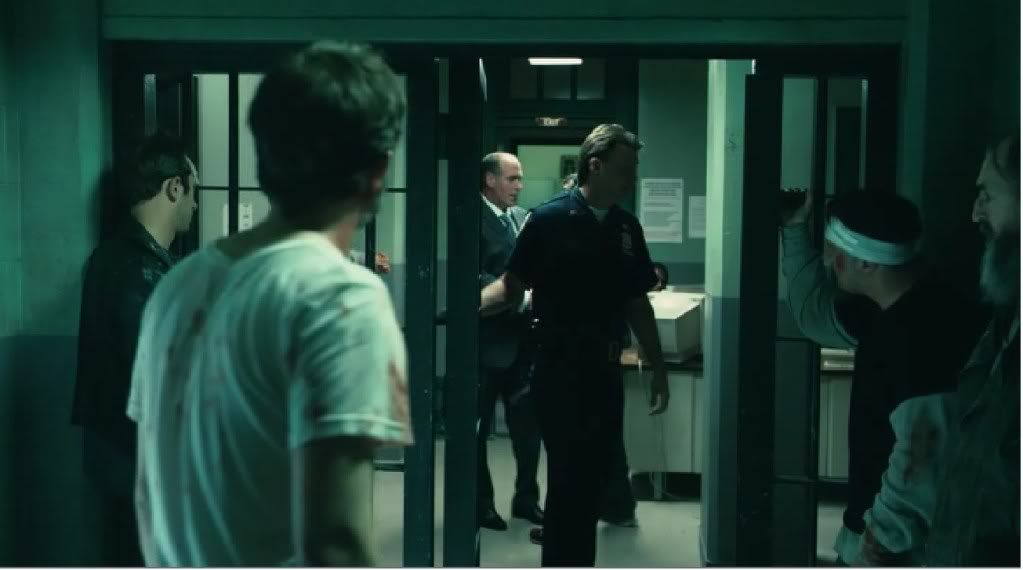
You watched the movie. You hit the "freeze screen" button on your blue-ray. You backed up, zoomed-in, and changed angles to get these answers. And you're still not 100% about that other guy in the jail cell, right? Well, let us help you out here.
The official answers to our trivia quiz:
2. What does Caroline say Tyler smells like in the memorial scene? "You smell like Listerine & beer" .
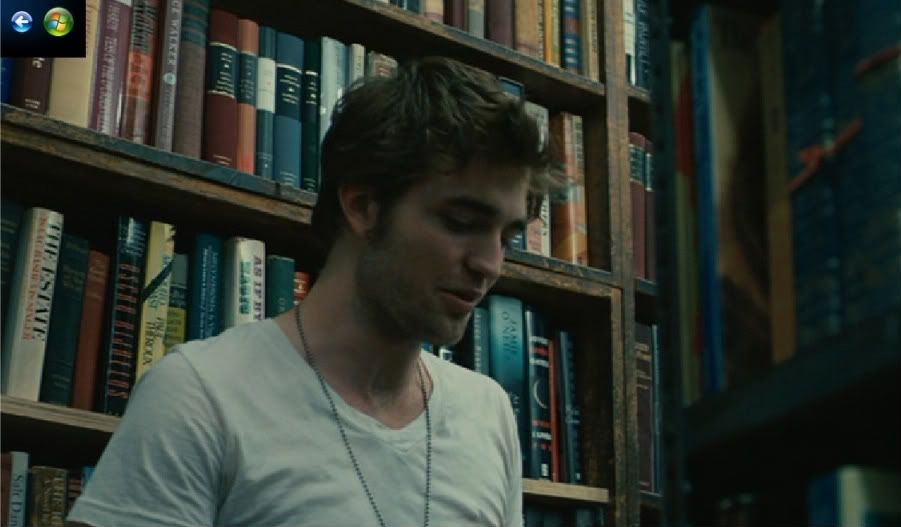
"The Estate" is the most obvious choice. But we have extraordinary fans, so here are some other answers given--we accepted them all! (Start your summer reading list now. Make Rob proud!)
"At Swim Two Boys"
"Plague Dogs" (I don't care that he was "putting it on the shelf". It counts!)
"The Temple of My Familiar"
"The Silmarillion" (Tolkien)
"Salt Dancers"
"The Brothers" (I am thinking this is a partial for "The Brothers Karamazov", but someone will correct me!)
The Essays of E.B. White
"The Celtic Consciousness"
"As if by Magic"
"Cakes and Ale"
"Heart of the West"
"The Way Forward is with a Broken Heart"
"Mosquito Coast"
4. What kind of drink does Aidan order at the bar? Two beers. Yes, he asked the girls what they were drinking, but he never ordered them a drink, that we can see from the movie.
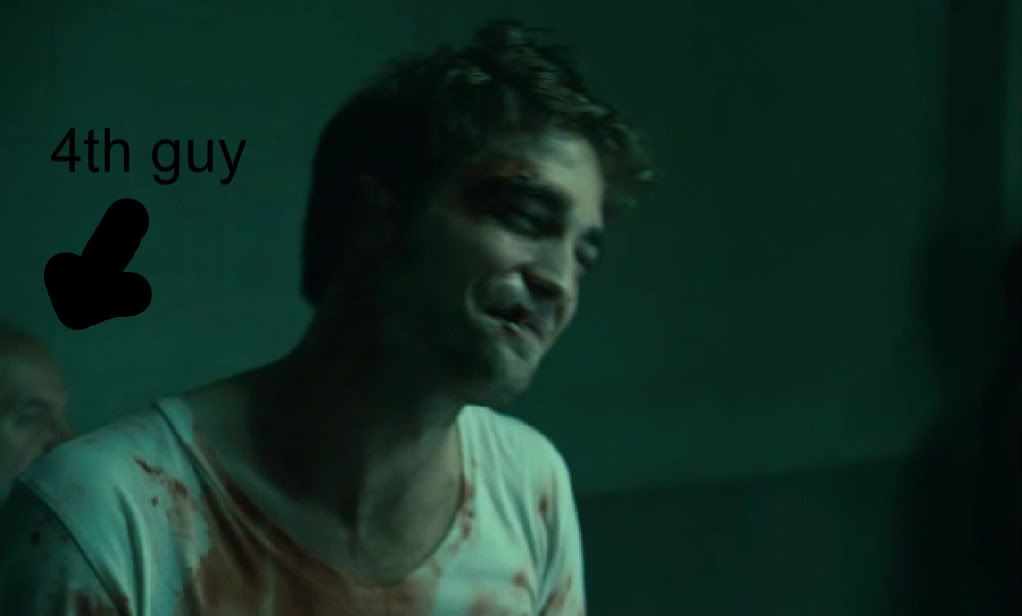
5. How many people are in the jail cell with Tyler and Aidan? This was the trickiest question, and it was tough, but I had to go with the consensus from my team. There are 4 men in the jail cell in addition to Aidan and Tyler. Many people missed the bald guy. Roxx sent us some screen shots to help.
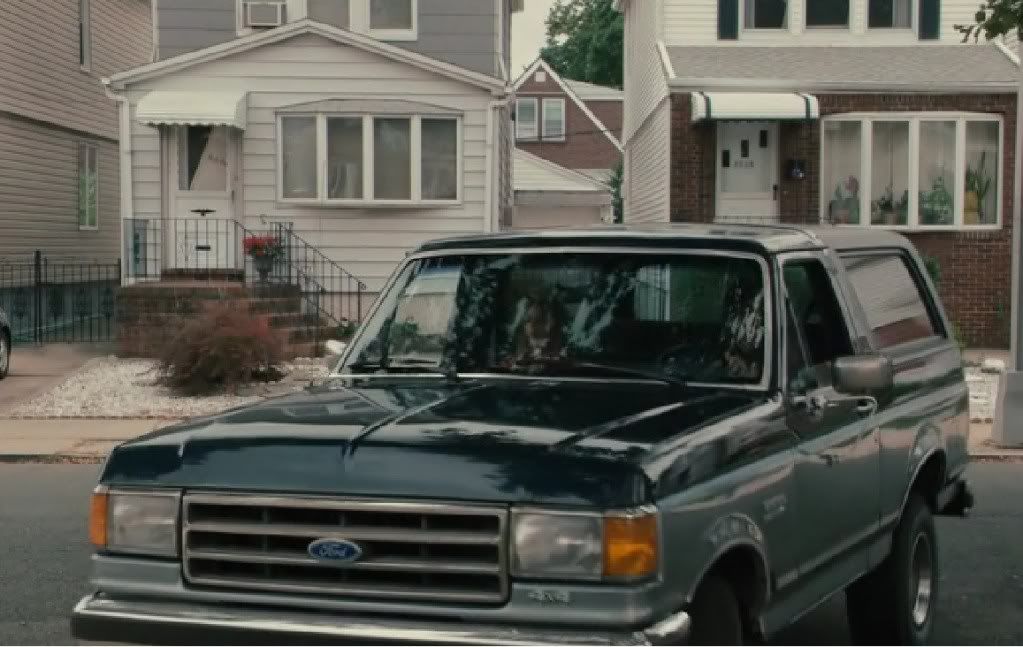
6. What make of truck does Neil Craig drive Ally to school in? Ford. Some said Ford Bronco, that's the make and model, and some overachievers even told us the license plate!
7. What did Ally’s mom do for a living? Nurse. We can see a photo of her in the Craig home in a nurse's uniform.
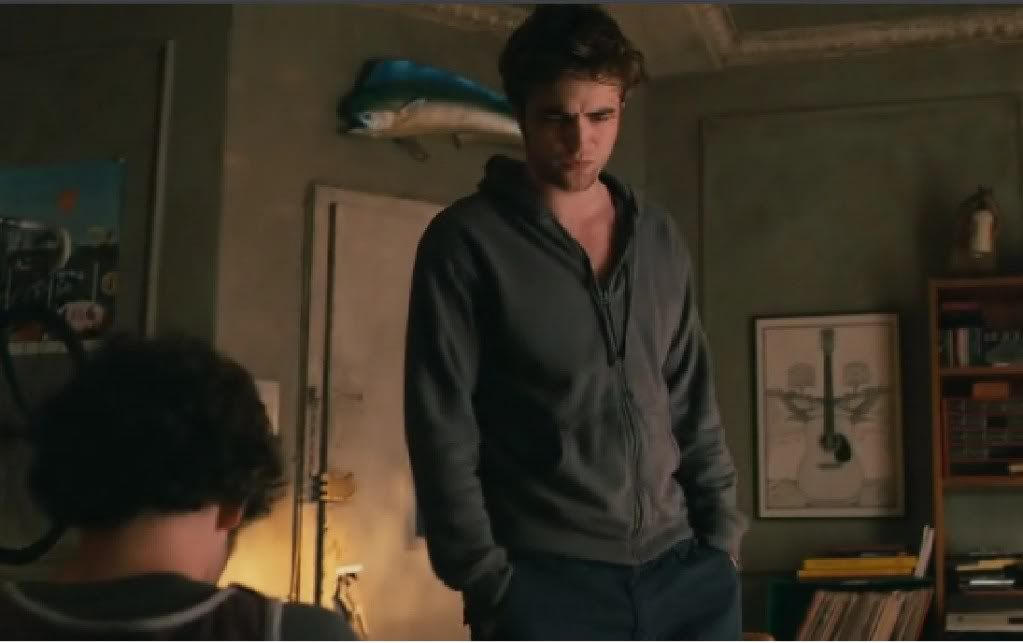
8. What is hanging above the door to Tyler and Aidan’s apartment? Fish--several people told us this is a mahi-mahi. We even got a lesson in taxidermy, although I am hoping it was plastic, because well, Eww.
9. How long does Diane say that Charles will have to wait for Caroline before he can take her to school? (At least) 20 minutes.
10. What is the highest floor number visible in the elevator as Tyler makes his way up to Charles' office for the last time? 90. Again, this required careful attention, but given the events that were following, this was an important detail.
Thanks to everyone who entered. We had a lot of fun creating this quiz, and hope you all enjoyed playing along. Congrats again to our winners. And everyone else can go on our Christmas card list this year. LOL!!
Allen Coulter talks about Remember Me
‘Remember Me’ alive with emotion
by Bruce Kirkland, QMI Agency
There is an elephant in the room, metaphorically. He is a most handsome, most famous, most perplexing elephant. His name is Robert Pattinson, a superstar among Twi-hards who follow his every breathless, bloodless moment in the Twilight series.
But "the room" is an American indie film called Remember Me, beautifully crafted with an air of thoughtful melancholy by director Allen Coulter. This is the story of a New York university student estranged from his wealthy father, in trouble with cops, and intrigued by the daughter of one detective who has already smashed his face in during an alley fight. The film just debuted on DVD following its modest theatrical run, timed to coincide with Friday's release of The Twilight Saga: Eclipse.
In Remember Me, Pattinson gets to play a real human being in a romantic drama populated by other functioning humans. They are flawed, complex, interesting people played by Pierce Brosnan, Chris Cooper, Lena Olin, wonderful child actress Ruby Jerins and Australian discovery Emile de Ravin as the object of Pattinson's burning desire. No one drinks blood, although this saga is rife with tragedy.
Coulter, a New Yorker, is on the phone explaining how Pattinson, already cast in the first Twilight, was eager to find an antidote -- something radically different -- even before its release. Executives at Summit Entertainment, producers of Twilight, were looking to help out.
To read the rest of this article, please click here:
jam.canoe.ca
Saturday, June 26, 2010
Beginnings and Endings: Déjà vu in Remember Me
The film Remember Me is a complex layered knit. Elements are mirrored, or recur or bookend in such a way that the viewer is always reminded of the other side. Using this device, the filmmakers criss-cross back and forth through the story, entwining the beginning with the end constantly, pulling every thread together with the others. When we watch, we are always being drawn back, always remembering. If you see the film only once, you will be aware of only a few of these instances, but they will all be working on you. This undercurrent hitting our subconscious minds in a kind of eternal recurrence is genius.
Bookending brings us back to the beginning. It contains the whole. It creates a package, a contained unit. The film folds back on itself over and over many times with different bookended moments. It draws parallels and similarities between them.
What do I mean? Okay, here are examples, some of which are obvious and some not so much.
1) The Twin Towers are clearly visible in the subway scene at the beginning, and there they are at the end when we see Tyler standing inside one of them.
2) The death of Ally's Mom at the beginning and of Tyler at the end bookend the film. At the beginning Ally watches her mother get killed and at the end she looks up at the towers, ashes falling around her, as Tyler has been killed. Grief to begin and end.
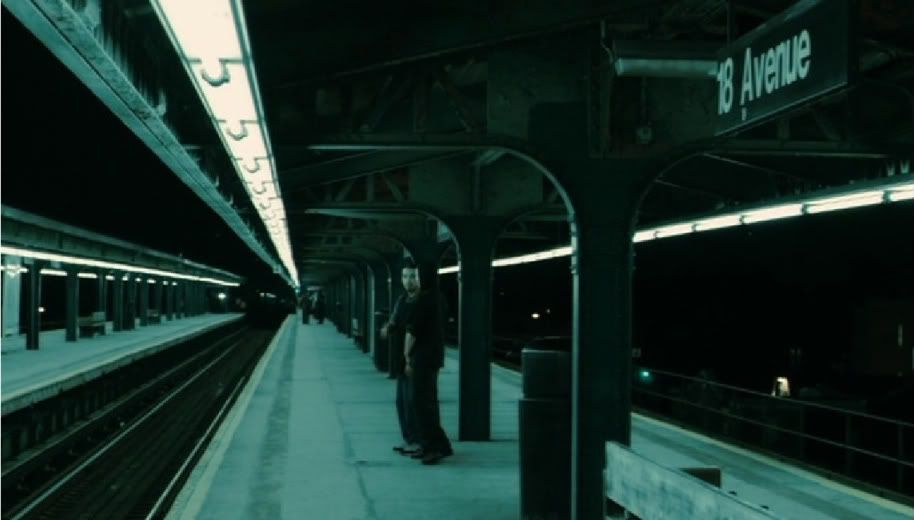
3) Of course there's the obvious mirroring of Alley at the subway in the first scene, and her braving it at the same station in the last scene, indicating the impact Tyler made on her life.
4) The first time we see Neil and Ally together—subway, at the killing spot—he picks her up and holds her tight. Last time we see them together, right after he gets home on 9/11, they hold each other tight. Again, they are all each other have.
5) Tyler has Michael’s name tattooed over his heart. Later, Aiden has Tyler’s name tattooed on his arm. [thanks Verlinda for noticing, Brevet post]
6) Tyler finds his brother’s hung body and Ally sees her mother killed. This is back story mirroring, not visual.
7) The Hawkins family at Michael’s grave at the beginning and then at Tyler’s at the end.
8) Neil slaps Ally. Later, Ally slaps Tyler.
9) We know Michael hung himself, which is a choking death. Then Tyler allows an incensed Neil to beat him up and almost choke him to death.
10) Ally’s Mom memorizes the mugger’s face and we memorize Tyler’s face when he stands in the tower—yes, we do; beginning and end.
There are numerical coincidences too.
11) Ally was 11 yrs. when her Mom was shot and Caroline was the same age when Tyler died.
12) Michael and Tyler were both 22 when they died. (Anyone watching a second time notices that was obvious from the get-go and Tyler blowing out the candles is, of course, basic foreshadowing.)
There are, I’m sure, more of these instances of this device in Remember Me.
But for me, the most significant and meaningful ‘bookend’ was when we meet Tyler and when he leaves us.
(I developed it on the comments of the “Framing and Mirroring” post at the Unofficial Remember Me site: www.rememberme-film.com Quoting the post: “Some of the ladies on both Rob's and the Remember Me IMDb message boards have been discussing the film in great detail. Mils1234 compiled a detailed post of some of the observations and insights... The first time we see him—Tyler—he is framed in a window, on the outside looking in. The last time we see him, he is framed in a window, on the inside looking out. I find this to be such a perfect symbol of his journey.) Thank you, everyone on the site, for getting me started. I will analyze this amazing bookend.
Uh-oh, unlucky thirteen.
13) We meet Tyler when he is outside on the fire escape, looking inside when he hears the phone ring. We leave Tyler when he is inside the North Tower, looking out. I think this significance was built into the film deliberately. Tyler, at the beginning and throughout the film, is tortured and looking inside himself, looking in. At the end he is at peace and looking outside himself, greeting the day. (Ironically.)
And, at the beginning, when he’s looking into the apartment, from our vantage point, the apt. is black, a black frame for him, so he is looking inside the darkness within himself. And, at the end, when he’s looking outside the window, his face is illuminated, but the background and the window area is either black/dark, or striped like bars of a jail. He is paradoxically free—the illumination—and yet captured, a prisoner of fate
The most wrenching thing: We meet him; we look out his apartment to see Tyler safe outside, on the fire escape, smoking. When we last see him he is inside the tower and he is trapped, with no fire escape. From his position in the tower and our knowledge of where the plane struck, he would have been engulfed in the first firestorm, gone in an instant.
To take the ideas further:
He is physically safe outside on the fire escape at the beginning, but is in grave emotional peril, which is illustrated by him stumbling into the room, as he stumbles through life.
And the end he skips in the hall towards his father's office, insouciant, like a carefree kid, and he calmly occupies that room with every little graceful movement. He lovingly smiles at the family photos, becoming more and more tranquil.
(I love when he gently touches Janine's arm as he passes by her. She's sorry she doesn't remember Michael's birth date but Tyler knows she cares. This was a very touching moment.) He now inhabits a serene emotional place. And that's the point the camera chooses to tell us where he is.
What is the purpose of ‘bookending’? Why use the device? And why use it so much?
To show the circle of life? Well, it demonstrates the circularity of life. To show us cycles, repeating, recurring patterns.
But you’ll notice they don’t all repeat exactly. I will let you think of each instance and draw your own conclusions. But I’ll use one to show you how they change. At the very beginning, our eye follows the blurry subway as it travels. And there are Ally and her Mom on the platform, waiting. Then, at the very end of the film, we see Ally’s serene face, then the blurring as she sits on the subway [thanks, Kat].
The purpose of the bookends is more complex than just drawing us back to the beginning, over and over. The recurrences become resurrection. Because the interesting and significant thing is really this: The film ends, not with grief, not with the circle, not with repetition. It ends with the spiral towards the next level, with something new. It ends with hope and healing. Much as I, in my grief, died with Tyler when the screen went black and blank, that was not the end. Nor were the first shocks and sorrows from his loved ones which were depicted in the beginning of the final montage.
No, the end was when Zarvos’ score changes during that sequence. The music, a piano cutting in, slides seamlessly into a crescendo of triumph. You go from the bell-toll and violin sorrow which tears your insides, into a sadness which allows you to remember lovingly. The music and the montage shows us that with this everlasting grief comes everlasting change within. You are never the same after Tyler dies. Because he mattered. Because he made a difference. Because he loved, and so do you. Forgave, and so do you.
You heal. How? Well, your sadness allows you to hold and keep your loved one in your heart, yet go on to face the world. He has become a part of you and you never forget. Never. You keep his memory alive. You make him part of you. You speak his name. Speaking the name is a magical resurrection, do you see?
You tattoo it on your body. Make him yours. You write about him, to him. You tell him the secrets of your soul. Make him yours. You heal by carrying him inside you when you meet the world. But you meet it with a depth you hadn’t had before, before his death and your grief, before you knew.
And so the circles, the symbolic recurrences the filmmakers used to bookend the film, all dissolve as Ally smiles in that last close-up. He had made love to her in life. Tyler had come inside her. And he is there still, inside, smiling the same last serene smile he did on the day he died. Through her. And she’s made him hers. Forever. And that cannot be contained.
Thursday, June 24, 2010
Tate's been quite busy with interviews that he has been doing in conjunction with the Remember Me DVD release. And that is good for us! In this interview, he talked to Christina Radish of iebs.net via telephone.
Tate Ellington Talks Remember Me
by Christina Radish
Now out on DVD, Remember Me is an unforgettable story about the power of love, the strength of family, and the importance of living passionately and treasuring every day of one’s life.
Tyler (Robert Pattinson) is a rebellious young man in New York City, who has had a strained relationship with his father ever since tragedy separated their family. At the encouragement of his best friend, Aidan (Tate Ellington), Tyler meets Ally (Emilie de Ravin), who understands everything that he’s going through. As her spirit unexpectedly heals and inspires him, he begins to fall for her and, through their love, he begins to find happiness and meaning in his life, until the events of 9/11 change their lives forever.
During a recent exclusive phone interview with IESB, actor Tate Ellington spoke about playing Rob Pattinson’s best friend, identifying with his character and the behind the scenes features that are included on the DVD.
IESB: How did you get into acting? Did something guide you down that path?
Tate: We didn’t really have any sort of acting thing at high school. I grew up in a town in Mississippi, and there was one theater in Jackson that was the only place to go see anything. I was originally painting. That was my thing. That’s what I still do, and that was my initial plan to go to college for. I got a scholarship for it and was supposed to be heading there. I had always wanted to try acting, and the one theater in Jackson had this summer program for two weeks, so I decided to give it a go and try it there. It turned out to be almost like a daycare. I was 17, at the time, and there was one other 16-year-old, but everybody else was eight. I felt really weird and out of place. But, the instructors ran the theater too and they asked me to audition for “The Diary of Anne Frank” for their coming season, and I did and got the job.
That was where I was sold on it. We started rehearsals and I had just never felt more at home. I was like, “This just feels right. This is exactly what I want to do.” There was one night on stage that we were doing the show, and we were already about a week in or so, and it was just some random scene that we were doing, but I just had one of those moments where I was like, “I want to do this for the rest of my life. This is what I want to do.” So, I had to turn down the art scholarship and that’s when it all started. After that, I ended up going to the University of Mississippi and tried to double major in art and theater there, but it just became too much, so I had to pick one. I knew I could always do art on my own, but I didn’t know anything about theater and wanted to learn, so that’s how it started.
To read the rest of the interview, please click here:
iesb.net
Wednesday, June 23, 2010
Movie Mike's Interview with Tate Ellington
Mike Gencarelli from Movie Mike's Blog had the opportunity to interview Remember Me's Tate Ellington for his site.
Interview with Tate Ellington
by Mike Gencarelli
Tate Ellington co-starred in this spring’s drama “Remember Me” opposite Robert Pattinson (“Twilight Saga”) and Emilie de Ravin (“Lost”). Movie Mikes had the chance to talk to Tate about his role in “Remember Me”, what it was like working with his cast and what’s in store for the future.
Mike Gencarelli: What did you first think when you were going to audition for “Remember Me”?
Tate Ellington: I wasn’t aware of what the project was at first. I didn’t know it was a studio picture. I went in and didn’t feel I was right for it at first. I said “There is no way, they are going to cast me in this”. A few days later, they told me I did well but they were going to go to LA to look more and they would let me know. I said to myself that they are never going to call again. So a month goes by and they called and said the director wants to meet you. When I met Allen (Coulter), I thought i did awful. I left the room and thought this is definitely done now. I get another call a few days later and they wanted me to meet Rob (Pattinson). I never thought originally it was going to lead to me getting the job but it ended up being great.
For the rest of the interview, please click here:
MovieMikes.com
Tate Ellington talks Remember Me
Tate Ellington talked with Hollywoodlife.com about what it was like working on the Remember Me set with Robert Pattinson and Emilie de Ravin.
by Laura Schreffler
When you think Robert Pattinson, you think of his dark and brooding Twilight Saga character, Edward Cullen. You don’t think: ‘Hey, R-Patz could totes be the next Russell Brand.’ But guess what? According to his Remember Me co-star Tate Ellington, Rob has all the makings of a seriously hilarious stand-up comic!
“He’d be a great [comedic actor],” the star, who played Rob’s BFF Aidan Hall in the film, which is released on DVD today, June 22, told HollywoodLife.com exclusively during a phone chat June 21. “He would say these great and wonderful things that make you go ‘What?’ He would just crack you up the whole time. All the time, on set, he was always smiling. I think he’s hilarious. He could do straight-up comedy.”
To read the rest of the article, please click here:
Hollywoodlife.com
Remember Me Poster Mail In
Summit Entertainment is offering a Remember Me poster via mail in for those who have purchased either the Remember Me DVD or Blu-ray.
To receive your poster:
1. Complete this claim form (in pdf file on site)
2. Enclose the cash register receipt (photocopy ok)
with the eligible purchase date and price circled
3. Enclose the original UPC bar code symbol from
the product purchased (yes, you have to cut your DVD box)
4. Mail Claim Form and enclosures to: (address on site)
Form must be postmarked by 10/1/2010, received by 10/15/2010, and purchase must be made from 6/22/2010 through 9/30/2010.
Here is the link to the site with all the necessary information and the claim form and address:
Rememberme-movie.com