Saturday, August 28, 2010

Ruby Jerins - News and Interview


Kevin Gillette from the Fringe Report Blog recently interviewed Ruby Jerins. She talked to him about how she got started acting, gets into character and how she balances her busy schedule.

Ruby Jerins is a very busy actress – between film engagements (“Shutter Island” and “Remember Me,” to name two recent works), a recurring role on television’s “Nurse Jackie”, ballet, and school, she barely has time to just be Ruby. But she was able to carve out some time to talk with Fringe Report’s Kevin Gillette via Skype, and a portrait of a charming, talented and energetic young girl emerged

To read the rest of the article, please click here:
Fringe Report.com


Ruby will also be guest starring in an episode of Law and Order - SUV which premieres on NBC on September 22nd. The episode is entitled Bullseye and is the second part of the two part series premiere. Check your local NBC station for the time.

Also, Ruby's Showtime television series, Nurse Jackie, is up for an Emmy award for Best Comedy Series! The Emmy's air tonight on NBC.

Thursday, August 26, 2010

Cast Spotlight - Peyton Roi List


Peyton Roi List played the part of Samantha in Remember Me. Samantha is the little girl who is the ring leader in the torment of Caroline, Tyler’s sister.

Peyton was born in Florida and is the oldest of three siblings. She has been in acting since she was 4 years old. Her first role was in As the World Turns, where she played a Little Girl in a Diner (uncredited). Two years later, she had her first movie role as a little girl playing on the steps in Spiderman 2. She continued to do guest roles on television shows including All My Children (2004), Saturday Night Live (2007), Cashmere Mafia (2008) and Gossip Girl (2009). Her big screen roles during that time included young Jane in 27 Dresses (2008), young Isla Fisher in Confessions of a Shopaholic (2009), Emily in 3 Back Yards (2010) and young Becky in the recently released The Sorcerer’s Apprentice (2010). She also has a role in the horror film Bereavement (2010), which is currently making the rounds at film festivals and Something Borrowed (2011) which is in post-production. In August, Peyton began filming Diary of a Wimpy Kid Part 2 (2011), where she will play the role of Holly, the wimpy kid’s crush. B

In addition to acting, Peyton is also a model. She has done over 400 advertisements including shoots for GAP, Chaps by Ralph Lauren, GANT, Diesel Jeans, Aeropostale and Target. She has also done commercials for Volvo and Wendy’s.

When she is not acting, Peyton can be found studying acting, voice and dance or riding her bike, writing stories, ice-skating and hanging out with her friends.

Peyton is also the StarPower Ambassador for the Children’s Starlight Foundation. The foundation helps seriously ill children and their families cope with their daily challenges.

Of Remember Me she has said that the most challenging scene to film was the scene where Tyler comes to school. And it was quite crazy with all the fans surrounding the shooting.


Sources:
List Twins.Vanilla-Sky.org
Peyton-List.co.nr
IMDb

Remember Me Discussion Group


Who do you think wins the fight in the boardroom, Charles or Tyler? Why?

Remember Me Tops I-Tunes Romance Rentals

Remember Me is currently top ranked on I-tunes rentals in the romance category. It is ranked #39 in all films.

In total sales, Remember Me is currently # in the romance category and #95 among all films.

Wednesday, August 25, 2010

Remember Me "Making Of" Clip

The UK's heyuguys.com received this short clip from Remember Me's UK distributor E1 Entertainment. The clip is part of the "Making Of" segment that was featured on the Remember Me DVD.


Source:
heyuguys.com

A Little Help - Artwork in Remember Me

Miko has commented this question:
"There is a black on black painting in Tyler's apt..... a two-part series of a black circle on black background and then below it, a black square on black background. Does anyone know whose paintings these are? Tx."


Anyone know?

Tuesday, August 24, 2010

Tyler in Remember Me - The Human Face of Tragedy

For this Tyler Tuesday, we have wonderfully in-depth article by Jessegirl. In this article, she discusses what makes Tyler the way that he is and what steps he must take or is taking, in order to move his life in a more happy direction and to heal from the hurt.

by Jessegirl


Who is Tyler Keats Hawkins? Well, in a film chock full of symbolism, he is biggest one.

Tyler is The Symbol – capitalized.

He is the symbol of 9/11 losses.

He is the human face of the tragedy.

He is the one sacrificed, so we will think about it, so we will know, but most of all, so we will feel.

Tyler leads us, guides us, to conflict, to loss, to love, to healing.

And, he is the Symbol of our deepest losses.

This character is also the core of the film, the centre, the hub around which all else revolves. Because he has been so perfectly brought alive in this film he has the power to become a touchstone, leading us to those deep places within ourselves which we need to find in order to become more fully human.
Wow! All that? –Well yes, and more, actually.


Get real, some say. He’s just an ordinary, mixed-up college age kid who isn’t enrolled, who works at a dead-end job, smokes, drinks, sleeps around, gets in fights recklessly and has an obnoxious air of self-righteousness. Right?

Some critics have stayed at this level of perception. According to them, he “sips existential angst” [James Plath:DVDtown.com ], while “boasting a smug nihilistic attitude” [Prairie Miller:Newsblaze.com ]. He has the “archetypal soul-of-a-poet bad-boy schtick [Alistair Harkness:Newsscotsman.com ]. He is “a directionless NYU student who drinks, smokes, and shags around” [Alice Tynan:The Vine.com.au ] and a “rebel without a clue” [David Medsker: bullz-eye.com]. The most scathing indictment I’ve come across is from S.T. Airsdale [Movieline.com]. Quote: “Tyler may be a whiny bitch you just want to drop-kick into oncoming traffic...” Whoa! Thems fighting words! Which, I’m sure, was what Airsdale intended.

These negative criticisms of the character are, I think, based on a view they share with Tim Robey [telegraph.com], who says, “we never quite twig what Tyler’s problem is”. Well, yes, if you don’t understand Tyler’s problems, you might just skim the surface and not have a clue. Thanks for that admission, Mr. Robey.


On the other hand we have Kirk Honeycutt [TheHollywoodReporter.com], who gets it. “Tyler...brother’s suicide has pulled the rug from underneath him. He is a lost soul, and it’s not clear he’s going to snap out of his funk anytime soon.” Now if you know anything about the effect of suicides on their loved ones, especially on an impressionable adolescent who found his brother’s dead hung body, you will know that Tyler suffered a class-A trauma. Both he and his family would deal with their internal devastation, guilt and unresolved issues for years to come. That’s the nature of the beast.

Grieving
Yes, it’s been six years since Michael Hawkins decided to end his life, but “snapping out of the funk” is hard work. Grieving is hard work. Seen in this context, everything we know about Tyler shifts. Even little things we observe about him inform us that he is lost, but fighting his way back to life. For example, Tyler has photos of Michael all over his apt. Ally asks, “Who’s this?” and Tyler answers. When a guest asks, Tyler can acknowledge Michael’s existence out loud. This legitimizes it. So every time a guest asks, Tyler is forced to go to that internal place again.

He leaves himself open to callous comments and also trusts that the person who will take him into his pain will be sympathetic. He deliberately, if subconsciously, leaves himself vulnerable, and keeps open the door to grief. This is something he has to do, and it is a brave thing. A young man his age, unmarred by such a life-altering event, would be all about bravado not bravery, invincibility not vulnerability. In so many ways Tyler is ordinary, the Everyman, but in other ways, he is extraordinary.


Preoccupation
When we meet Tyler, apart from a few key commitments, he is living a marginal existence by choice. He actively and deliberately protects and supports his sister, Caroline, props up his mother, and is determined to break down his father. However, the rest of his life is really just existence he floats through in a preoccupied haze. What absorbs him?

Well, his brother’s death has raised huge existential doubts and questions in Tyler, and, until he resolves them, he is stuck. One of those is coming to an acceptance or peace about Michael’s death. Another is finding the will to live. They are wrapped up together.

Nothing can happen unless he takes care of this first, and Tyler knows this instinctively. So we have him clearly not paying attention to the Miami brunette’s slurred come-on, yet hearing someone calling ‘Michael’ in the alley. He’s not in the moment at all. He’s in his own inner world.
As I see it, Tyler has three key tasks on his plate when we meet him.


Tasks
1) Working through his grief, his unresolved issues with Michael, finding acceptance. His journal is his homework. This is the first and foremost task, but it is aided by the others.

2) Getting through to his dad, who has chosen a form of grief which disengages him from his family, especially his children. Caroline and Tyler need him. This task is crucial.

3) Engaging in life fully, coming back to life. Tyler is, I think, only dimly aware of this. He can’t see this goal, not until Ally comes into his life.

Until these tasks are completed, Tyler will live his partial life, because, you see, he is questioning the value of life. His formlessness, his lack of ambition, rage, sense of impotence, all stem from this.


Auditing Life: To live or not to live-
Remember when he tells Ally he’s undecided about everything? And later, that he just audits college classes? We on this blog have called it ‘auditing life’. He doesn’t commit to college, or to a woman, and he has no career ambitions. Everything is on hold. Why? Tyler can’t proceed until he figures out, as those close to suicides do, why. What about life itself was so very horrible, but also real and true, that a person would want to give up life to escape it?


The scene in the jail cell with Aiden is about Tyler flirting with danger (taunting the other prisoners –‘pussies’). He provokes them and laughs at Aiden’s scolding—not his finest hour. Tyler is also testing an unformed death wish. He’s punishing himself, but for what? Well, he thinks he must have done something wrong if his father left him. This is a core pain, that horrible feeling that you aren’t good enough. And if you’re not good enough to be loved, why go on? Is that what Michael thought? Should Tyler come to a similar conclusion? That’s the danger Tyler is flirting with.

He is coming close to that state where he believes in nothing, or, is trying it on for size, just like he tries everything on for size. Oh yeah, he’s auditing nihilism too. And apathy. To live or not to live? But underneath, his apathy is fake, a cover, a smokescreen. Tyler is a deep soul who is on the brink of nothingness BECAUSE he cares so much. The auditing isn’t apathy; it is terror.
He knows being invested in anything means you can’t just check out like Michael did. Auditing is place-holding, and giving the appearance of normalcy while he does his real work. His real job is grief.


Journal
Tyler’s primary tool for working out his grief is his journal. THAT’S where he’s living his life. He is really alive, but not engaged with the world in front of him, which are two different things. People grieving deeply see the world through a veil; they don’t really engage. That’s grief. I’ve covered the journal in another article [“Tyler’s Journal”, June 13th] so I’ll just say that it is the private place where he processes his grief and also honours Michael. In it he debates existential questions. This is all hard work. You might have noticed that in the film he is seen writing in his journal a number of times in different locations (cafĂ©, bedroom, beach), that he often carries it with him; it’s in his back pocket when he goes to the grave and it’s with him in the tower at the end. It’s a daily habit. He organizes it, wraps previous sections in elastic bands. Now and again a voice over lets us know what’s in it. Violent and intimate thoughts (son castrating the father, Ally’s presence) are recorded in this uninhibited place which Tyler uses to explore and to heal.


Father
Charles is next on the list. Sigh. Much of Tyler’s conflict with his father seems like the normal sparring between the ‘old cock’ and the young one. Their antagonism is evident when we first see them together (“You could’ve worn a tie.” “Yeah, I could’ve”) Then, in the sweets shop, they dominated and subverted what was supposed to have been a time of family solidarity, turning it into their own fighting ground (“Pass the sugar.”).

On the surface, much of this dynamic could be part of old ‘grudges and grievances’, as Rob said, stale, typical father/son stuff which goes on in many families. It is anything but. Again, it exists as a result of the way Charles and Tyler both dealt with Michael’s death.


This specific thing could be the subject of an article on its own. I will try to cover the main points but be aware that the boardroom scene alone is the subject of much debate. Bereaved parents have a particularly tortured path. So Tyler’s mother is needy, clingy, fragile, and he avoids her, feeling smothered probably, and he won’t fight her because she’s broken. But Charles’ way of handling grief is disengage from family life, to avoid his kids and to build a wall around himself. The fall-out from his choice is dangerous. Because children need to be shown love, feel secure in it, and clearly Caroline and Tyler do not feel loved.

Tyler’s task is to break down his father’s wall and get him to SHOW his children love and attention. So, what follows is my partial take on the boardroom scene.

The Boardroom Scene
Ostensibly, Tyler is fighting for Caroline when he confronts his father. But by ‘saving’ Caroline, he saves himself. He is always also fighting for himself. The pivotal boardroom scene is a last ditch effort.


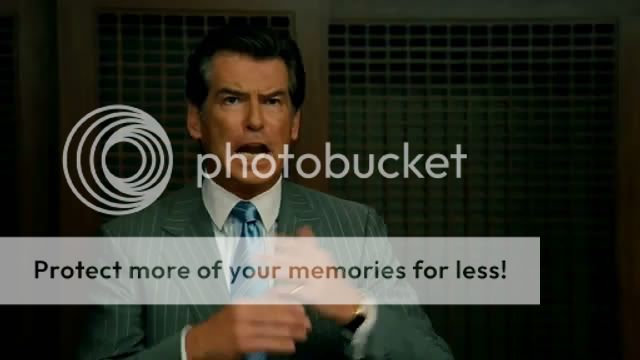
In this corner we have Tyler, coming with feelings of self-loathing as a consequence of his father’s neglect. Both he and his sister desperately need obvious and direct expressions of love from their father. He bursts in, angry, accusatory, full of self-righteous indignation, waving Caroline’s picture. He yells (“Why aren’t you riveted?”), but soon deflates, stutters, becomes inarticulate. He is almost child-like, begging Charles to care. ‘Please, Dad, love us,’ you can almost hear him say. When nothing he says seems to matter, in his anguish Tyler lobs the big reveal: “I found him.” Then he pushes the big button, the warning shot, that Charles’ other children might possibly kill themselves too. This provocative statement has his father lunging at him immediately. But it is also a desperate plea that Charles validate him, that Charles show love so that Tyler will know life is worth living.


And in this corner we have Charles, confident, in-charge, in command of his ‘troops’. He plays dirty pool. For years, he has been hiding behind his wall and shutting out his family and he’ll be damned if his son brings it down. He deflects the issue by drawing attention to Tyler’s immaturity (‘rode down on your bike’, ‘you’re responsible for no one’). As an aside, if you think about it, this is a lie. Because, in Charles’ absence, Tyler has taken on the responsibility for Caroline’s welfare. In so many ways he takes care of his little sister.
But Charles, desperate to remain in his safe place, has, it seems, given up the father’s role in any but the financial way. And he WILL NOT be forced to show love. He insists ‘his troops’ remain in the room to witness the exchange. And because of that, his –‘what you feel in your heart’—was said, not to make Tyler understand, but to grandstand. Charles really does feel what he said, but he uses it to put down his son and make himself look good in front of the audience he demanded stay there. In my opinion, he needed the audience as a buffer because if he was alone with Tyler there’s no telling what would happen,-a physical fight, or worse, breaking down crying, perhaps the catharsis he so badly needs.

I sympathize with Charles’ plight, don’t get me wrong, but to treat his tormented, begging boy this way is terribly cruel. And childish. Nevertheless, he thinks he has to keep up that wall. If it is breached and crumbles Charles will be exposed and forced to face his failure as a father. But Tyler is adamant as well as pleading; some part of him KNOWS he’s got to get through. This is so very necessary, what Tyler does. The whole family structure depends on it. It is what the Gandhi quote—‘because nobody else will’—was referring to. It’s huge.

Charles intuits, subconsciously, that he needs Tyler to call him out. Michael caved. Tyler fights. Yeah, he fights like the man/child he is, using the weapons of the young, like instilling guilt self-righteously. But, bottom line? It was a manly thing. Paradoxically, Tyler’s ‘childish’ behaviour helps him become a man.
The winner in this confrontation? Both of them, but they don’t know it until later. It is like a wound that has festered and finally been cauterized. They are both still in pain from the wound, but the cleansing is working through them, changing them. They begin healing. And in future, they will be allies. Whew! What a relief!


Ally and Waking up
Two down, one to go. Tyler needs to re-engage. Will Fetters said [in a Podcast, June 20, 2010] the central theme was love and Tyler ‘waking up’. It is Ally who, with her quirky individualism and strength, brings Tyler back to life. Tyler can have any toothbrush or Miami girl he wants but only when Ally plays hard to get and makes him work for it, does he do so. She engages him, throws him off in numerous ways—dessert first, lying about her age, almost standing him up, not letting him kiss her goodnight—which intrigue him. So he tries to please her, makes her a cake, plays juvenile games like spraying her with water, and then is nervous about her unusual response. By her unconventional and unique attitude, Ally is taking him out of his normal mind set and it is refreshing. He lets her into his private sorrow by telling her the truth about his tattoo—toothbrush girl got a wise-ass answer, no doubt.
There is much to say about their relationship but in essence she ‘wakes him up’. Mind you, his journaling and working out things with his Dad happen simultaneously. But it is significant that when she runs up to him on the beach and tackles him, she tosses aside the journal. It’s like she’s saying: ‘Forget that. I’m here.’ Now Tyler is beginning to have a real life apart from grief, a real relationship with a woman. Hurray! Of course it’s more complicated, with the revenge scheme, his guilt and confession, her forgiveness, all of which engage his soul.


Struggles
Unlike Aiden, who is much more straight-forward, Tyler’s soul tortures him with guilt. He has depth; there’s nothing superficial about his inner life. So his achievements are meaningful. For me it was Tyler’s struggle that was so touching. He tries so hard and I root for him. For a man who is confused and preoccupied, he always has his priorities straight. His moral compass is true and he follows it. He takes care of his sister, tries to fix things for his Mom. He takes responsibility for his actions—provoking Neil to beat him up as atonement for the revenge plan using Ally. We see his conscience working. We see him bravely expose his vulnerabilities.

It is his innate decency which matters, his courage to face and deal with his loss, with his father, with his poor choices. We relate to him intimately because we’ve seen him at his worst and his best, we’ve seen his complexity, his humanity. He has become like a member of our inner circle.


“Our fingerprints don’t fade from the lives we touch.”
Tyler’s Touches:
Gently touching Janine’s arm; kissing his sister’s forehead; making love with Ally; touching by toughing it out with Neil; lifting the weight off Aiden (of course he did); provoking Charles to lunge; accepting his mother’s kisses. Every time he touches his journal or writes in it he touches Michael.

Emotionally, even when withdrawn, he touches all the time. He can’t help himself. Some of us felt the touches, didn’t we? His look of vulnerability when he shows Ally his tattoo. His look of nausea while watching ‘American Pie 2’. His foot-pounding battered self overwhelmed with frustration and defeat after Neil beat him up. His tenderness when reading his sister a story. And so on.

He touches us. Again and again. Gets into our hearts. That’s Tyler. He touches us because he shows himself. He can’t help letting us see into his soul. That’s just who Tyler is.


And so when we lose him...that way...that day...the tragedy takes on a new meaning. It now has a face, and a story. Under the surface it catapults us to our own real personal losses. And somehow the loss of Tyler and of our own one becomes one big loss. And neither will ever fade.

Tyler stands for it all. He is The big Symbol.


"Thanks to my wonderful colleagues on this site, with whom I developed these ideas during our Remember Me DVD countdown quotes' comments."
~jessegirl

Monday, August 23, 2010

Remember Me Near Top of DVD Rentals

Remember Me DVD is ranked as the #2 DVD rental film for the week!


Let's all keep up the word of mouth on this wonderful litle film.

Remember Me Discussion


Last week, the New York Times posted the following article about smoking in film. They singled out Remember Me as a film that is "an example of a youth-friendly film that showed its dreamy lead character with a cigarette in hand".

NY Times.com 'Step Forward’ in Limiting Smoking Scenes in Films

Do you think that smoking is glamorized in Remember Me? Is there an anti-smoking message in the film also?

Thursday, August 19, 2010

Robert Pattinson in Remember Me - Part 2 Living Tyler

Jessegirl's wonderfully written second installment of Robert Pattinson in Remember Me takes a look at how Rob portrayed Tyler and how he brought Tyler to life in the film.


Robert Pattinson brought Tyler Hawkins to life in the most touching and genuine way. He showed us his complexities, both the flawed and the admirable, all of them, and we embraced that young man as if he were one of us, one of our inner circle. The core of was Tyler’s journey, and Pattinson took us all on it, allowing us to see the heart and soul of the character Will Fetters put on the page.

Pattinson never veered from that. He gave us Tyler’s body language, Tyler’s facial expressions, Tyler’s voice. Pattinson used his being as a medium to gain access to Tyler. He was living Tyler.

Tyler’s journey has its arc [which I will cover in a future piece] but here I will jump around, the purpose being to demonstrate various aspects of Pattinson’s performance.


On the surface, this college student seems like a fairly normal young guy: he smokes, he drinks, and he’s a bit of a male-slut. He displays the self-righteousness and recklessness of his age, getting into verbal altercations with his Dad and into fist fights without much provocation.


The son of a rich man, there is evidence of a sense of entitlement about him too, when he smokes in the inner lobby of his Dad’s company office, enjoying the discomfort of the receptionist who has to put up with his behaviour because he’s the boss’s son. Pattinson hit just the right notes in this scene, with the levity and boyish charm making the defiance, if still irritating, more palatable because it is funny. His line delivery, the crack in his voice, supposedly indicating disbelief, his physical gestures and facial expressions together show an incipient comedic flair.


Oh, and Tyler does one other thing; he writes to his dead brother in a journal [see my piece,Remember MeTyler's Journal ]. He carries this around with him, constantly makes entries in it, and his voice-overs are quotes from this diary. Now we are getting to the essence of Remember Me. It is grief.

Pattinson apparently said to the Mexican magazine Reforma (and I’ll quote it as I read it): “It’s about loss, how we handle grief, how it affects us. For many people, loss becomes part of who they are, and sometimes, in order to overcome a loss, we have to leave part of ourselves behind as well.”

Suddenly, everything this character does takes on a new sheen because, under that surface, Tyler’s grief informs all his thoughts and actions. And so, when Tyler hears his brother’s name in the alley, it is a trigger, and he gets into a fight.


This screencap shows us how Pattinson subtly conveys that Tyler is now alert, not to his friends and the Miami girls, who are out of focus for him, but to his brother. It’s all on Pattinson’s face, the alert preoccupation, Tyler’s inner world coming to the surface with that mention of Michael’s name.


Later, bloodied and bruised, in jail with a pissed-off Aiden, Tyler’s attitude is so evident in Pattinson’s body language. Tyler’s response when Aiden berates him is to play with his bunched up shirt, shrug, laugh it off, and hang his head down. Pattinson plays this so well, using his lanky body to perfection as his loose-limbed movements signal Tyler’s almost fluid yielding to his predicament. Pattinson told TeenHollywood that Tyler’s Mom had wanted to sue—a deleted scene—but Tyler didn’t care, that Tyler had this blasĂ© attitude. It’s fascinating because we see, under Tyler’s overt indifference, surrender, which is another thing entirely. There’s a lot going on in this—and every other—scene, but it illustrates Pattinson’s ability to show us many layers of his character almost through his body alone.


Let’s talk about Tyler and guilt. After Ally finds out about Tyler’s nefarious revenge scheme and leaves him, Tyler is devastated. While Aiden chomps on Chinese food and throws him worried looks, Tyler sits absorbing the shock of this new loss, and stares morosely at nothing. He gets off the couch in the most laboured way, weighted down by his misery, and shuffles down the hall, head down, fingers hooked loosely around the neck of his beer bottle, his slow plodding gait a mirror for his emotions. We know exactly how Tyler feels because Pattinson has shown us, with economy of expression and movement, and not a word has been said.


Then the guys go to the movies; American Pie 2 is showing—a 9/11 clue if anyone is interested—and the audience is laughing hysterically at the hilarious sex scene. Aiden laughs and checks for his friend’s reaction; Tyler smiles half-heartedly to appease him, then returns to his true emotional state, the dark theatre shielding it. Here, in this tiny scene, Pattinson uses his face and hand to reveal Tyler’s feeling of guilt, and his nausea was palpable. The sadness just wafts off him, his eyes show us his pain. Again, no dialogue, but everything said through his subtle facial expressions and minimal movements.

Tyler relates to every other character differently and this gives us a chance to see different aspects of him. He is a truly multi-dimensional person.


With his sister Caroline, Tyler is playful, supportive, but most of all, the protective older brother. In the sweets shop, where we first see the Hawkins’ family dynamic, he gazes at her with undiluted and uncomplicated love and she basks. He is playful with her, shares jokes, treats her with respect.


She confides in him, especially about her concerns about whether or not their Dad loves her.


He picks her up from school and when he realizes she is worried her classmates think she’s a freak, he puts on a French accent, and entertains her with garbled French gibberish, ‘sacre bleu’.


When she invites him to her art show he responds, “abso-freakin-lutely!” which makes her laugh. Pattinson brings a natural ease to these scenes. He and Ruby Jerins make this special relationship seem so real, so vibrant and pure, it is a pleasure watching these actors exchange dialogue.


Even the smallest scene makes us believe we are seeing, for example, a big brother on the bed with his little sister, his arm around her while she cuddles up to him, hurt from a bullying incident. He reads to her, his voice gentle and life-affirming. Not Jerins and Pattinson—and not a hint of Edward or Jimmy Dean—no, it is Caroline and Tyler.

Pattinson has said—DVD extra—that “Tyler is not really living at the beginning....but by the end he accepts whatever will be.” He has also said Ally “shows him how to live and how to mature...” Before Ally, there was ‘toothbrush’ girl and others. But, to revise, Tyler is not a man-slut but too lost and tortured to have a real relationship. Ally is the key to Tyler’s change, but there is no grand epiphany, no moment when everyone knows Tyler has changed. It is gradual, more realistic, and there is backtracking and conflict along the way. Ally is, arguably, the strongest character in Remember Me and Emilie de Ravin has also done an excellent job.


Ally’s ability to change Tyler begins, I think, when she throws him off. She doesn’t jump at a chance to go out with him, but tests his responses to her questions and doesn’t extend her hand until she gets a bit of truth. Tyler, who could have any girl he wanted on the basis of his looks alone, has to work for it. And it’s fun watching Pattinson’s face as his character tries tacks to hook her. You can smile through the repartĂ©e of this whole exchange.


Then, on their first date, which she almost forgets, she really throws him with her talk of dessert first. Boy does she have his attention. Again, beautiful acting off each other. Pattinson’s facial expressions here are priceless, as he tries to figure out Ally’s peculiarity, to reconcile it with the intelligent woman he knows she is. He looks at her askance.


He asks if it is a political statement or a medical condition—great line—then listens, all ears, as she explains. He’s too confused to laugh, so smiles, his mouth doing a great acting job all on its own. He clears his throat, opens his mouth as if to laugh, then just closes it. Pattinson’s eyebrows quirk, but it’s his mouth that wins the award here. It’s priceless how he shows us Tyler’s puzzlement. Then, later, she won’t even let him kiss her good night! What a woman!


There’s a lot to say, about this and all of Tyler’s other relationships and how Pattinson handles them. But I know, even with the pretty pictures used for illustration, generally short attention spans prevent me from covering much more. Suffice to say that Pattinson shows, as with the moments I’ve already mentioned, the other aspects of Tyler so well. The mischievousness when he sprays Ally, the vulnerabilities, the hurts, the guilt, the violence, and so much more. I am only touching the surface.

But I will cover the boardroom scene. While Pattinson has garnered good reviews for his acting in this film (Kevin McCarthy, Jackie Cooper, Dustin Putman, Pete Hammond, Kirk Honeycutt, Mary Ann Johanson and others), some critics disparaged Pattinson’s acting in the boardroom scene thus:
“He’s all elbow, stuttering and petulance...the big fight...is painfully bad..” [David Medsker] and “...confrontation scene in which Pattinson goes so overboard with his acting...” [Edward Douglas]. A dissenter is Rob Stammitti, who says that the ‘fiery moments’ between Pattinson and Brosnan ‘show off some of his potential’. Okkkay.

I think Pattinson’s performance in the boardroom scene is very good, but no better than in so many other scenes. But blow-up scenes are flamboyant chances for the actors to let loose and people seem to think this tests an actor’s chops more. I disagree, because subtleties are much more difficult to pull off.

I mentioned—part one—that I perceive this scene differently than Pattinson does. In video interviews he has said that Tyler is bringing old ‘grudges and grievances’ to the table, that ‘they’re just old’ and that Tyler and his Dad ‘have had the same fights before’, that after them, Tyler doesn’t even remember what he’d been arguing about and ‘feels impotent because it didn’t mean anything at all’. He says that the reason Tyler fights is that he’s trying to ‘break his Dad’s confidence’, that he won’t ever ‘shatter’ Charles, ‘which is the only reason he’s fighting him'. And that he doesn’t fight his mother because ‘she’s already completely broken’.

Pattinson told TeenHollywood Tyler is ‘rebelling against nothing’. But Tyler does have a cause. He must break down the wall Charles built to keep his family out (probably after Michael died). For me, ‘shatter his confidence’ only makes sense if it means getting Charles to engage his family. This is of utmost importance and it is one of the things Tyler must do, because only he can do it.

There is so much going on in this scene—which I’ll analyze in my piece on Tyler—but the bottom line is that Tyler is determined to call his father out for ignoring his children, to provoke him if necessary, anything to get through to him, because their lives are on the line. Yes, it is histrionic, yes, ‘hysterical gibberish’ (Pattinson), but it is to a purpose. Charles must re-engage and Tyler must break down the wall because Charles is terrified to do so. It is pivotal.


A fellow commenter [‘Rum’, quote #48] pointed out that when Tyler gets to Charles’ office, sweat-stained from the angry ride over on his bike, he deflates and becomes a pleading child. Yes, Pattinson shows us this vulnerable, scared kid who wants his Dad to show them he loves them. “She drew you a picture...” . All of Pattinson’s body language, the hand on hip self-righteousness, the guilt-inducing lines—‘why aren’t you riveted’—reveal a man-child using any weapon at his disposal to get his Dad to wake up.


His face becomes ugly as it contorts in anguish. Yes, Tyler is absolutely anguished.


He continues by saying that Charles can’t just ‘shatter’ their world.


After Charles dismisses him as irresponsible, as a child—‘You pedalled down here on your bike’, ‘You’re responsible for no one’—Pattinson’s face mutates frame by frame from disbelief, to impotence, to pleading, to anger and cynicism. Pattinson shows this so well. Next comes Charles trump line—‘You think, whatever you feel in your heart, I don’t also feel it in mine?’—which, with his employees present, is pure grandstanding.


Tyler feels defeated; he is near tears here.


Then he counters with what the audience doesn’t know—‘You didn’t find him’—a line which Pattinson delivers with just the right mix of pleading, accusation and misery. The fact that an adolescent Tyler found his brother’s hung body is a class-A trauma, one that should be handled carefully. Charles only hardens at that point when he should be comforting. But, wait, he’s got a room full of witnesses that he insisted remain there.


Let’s address the ‘stuttering and petulance’. Er, yes, the stuttering was the gibberish. In reality huge rage produces stammering if it stays verbal, and actually, most such confrontation scenes in movies are unrealistic because they don’t show this. I don’t know whether Medsker criticized Pattinson or Tyler for the petulance, but this confrontation was necessary and Tyler used any means necessary to join battle. Because he had to. Anyone who doesn’t understand that, doesn’t understand Tyler or his purpose.

Enough.

It was said that “Hollywood...is watching to see if Robert Pattinson can pull in a wider audience sprinkled with all ages and sexes” [Hollywood is Watching: Can Robert Pattinson Open a Film?]. Actually, those are two different questions. It turns out, the teens who love Edward, don’t like to see him with a different love interest, so they pretty much boycotted the film. On the other hand, those people who did go reported on the diverse audience demographic, and on the fact that non-Twilight fans received it very well.


Note:
-‘my date... was blown away. He loved it. He was so moved he couldn’t stop talking about it the rest of the night without choking up.’ [CAEdge. Brevet]
-‘I got dragged to this movie by my wife...It’s how this film touches my heart that sets it apart.’ [Steven. Brevet]

-‘We—on a French RM forum—all respond to RM on different levels according to our age—we’re 13-52—and our experience, but everyone agrees: the film is simply breathtaking. [Kim. Brevet]

-‘Took her 16 yr. old son, who said to her: “Mom, seriously, that was the best movie I have ever seen...Mom, this movie changed me.” [Kelly. Brevet]
I could go on but I think I’ve made my point.

Tyler is the hub of the wheel and everything revolves around him. Only a really great performance has the power to pull in a broad demographic and have the audiences utterly invested in the fate of the lead character. Pattinson has done that. Tyler gave him a broad scope of emotion and the actor conveyed it, showing his wide range.

Pattinson was living Tyler for us. He made Tyler his. And because he did it so well, we made Tyler ours. Many of us made Tyler ours forever.


Sources:
Reviews - Rotten Tomatoes.com
Audience Reaction - Reacting to Remember Me: an Interview with Screenwriter Will Fetters”, by Brad Brevet. March 16, 2010
Comment - ‘WhyistheRumalwaysgone’: Countdown to DVD release, quote #48