Saturday, September 25, 2010

Hints and Clues to the Ending of Remember Me

Jessegirl has written another wonderful article which details various elements of foreshadowing in Remember Me. She explores both the who and the what starting with the title and official poster.


by Jessegirl


So many people, critics and audience members, didn’t see the end of “Remember Me” coming. Since the film has opened, and even now for the DVD release, people feel blindsided, as if the end came out of nowhere. But I will show you that it was always a foregone conclusion and that the filmmakers gave us all quite a few hints or clues to guide us.


I was also shocked when I first saw it but I believe that it is what was meant and how Remember Me is best experienced. I have written about this in a previous piece [“The Ending of Remember Me: The Great Divide”] Here I would like to concentrate on all those clues. Read on if you’ve seen the film and are curious. I invite you to comment. You might have thought of other clues which you could share, or perhaps want to dispute mine. Fine.

You might need to watch the movie again to refresh your memory for this little game. If you haven’t seen Remember Me yet, you might want to stop here because it is best experienced ‘spoiler-free’

Hints about the ending of this film are peppered throughout; they appear as symbols, voiceovers, numbers, in speeches, a movie, in the music, the art, in reflections, shadows, in timing. But there are two points of the ending. One is September 11th. The other is who will die.


By the time we first see Tyler we already have enough information to suspect the attacks on the World Trade Center are, somehow, part of the story. In the very first scene, Ally and her mother in the subway, the Twin Towers are visible clearly and the words “Brooklyn, New York, 1991” appear on the screen. At the beginning of the next scene, inside Tyler’s apartment, the words are: “Ten Years Later”. The setting: New York City, 2001. A bell should go off in your head. Yet so many of us forgot that bell until it sounds in the film, the requiem bell tolling for the dead. By then, everything has happened.

Maybe, while watching, we have noticed other clues. Maybe not, because most of them are subtle and do not intrude or detract from the story as it unfolds. But they are there. I’ll enumerate them here, in as precise chronological order as I can. (Many I found myself. But a group of people on an IMDb message board, early on, compiled their own list and rounded out my discoveries. I acknowledge their perceptions, and will name them at the end of the article.) There might be more clues I’m not aware of, but this list should be more than enough to convince viewers of the ‘trail of breadcrumbs’.


*The Poster: The ash-coloured background, with a partial, wounded-looking view of the skyline of the city. Is something missing?

*The Title: If nothing else, ‘Remember Me’ is a call to memorialize, and someone is asking to be remembered. We don’t know who, but clearly melancholy would not come as a surprise.

*The Twin Towers—NYC, 1991—and then the apartment, 10 years later.

*The Gandhi quote, Tyler’s voice-over: “Whatever you do in life...etc.” Actually, all the Gandhi quotes speak to legacy, to what you leave behind after you die. And Tyler always says them.


*The stone angel on Tyler’s shoulder at Michael’s grave: It is actually reaching out to him. Tyler and his father are both in deep shadow, backlit. This is a momentary thing, fleeting, maybe only a frame or two, but definitely foreshadowing, and specifically attached to Tyler.
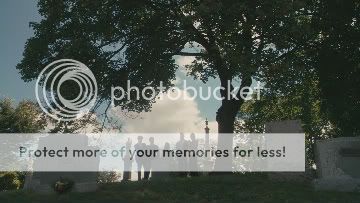
Zooming out, the stone angel is clearly behind Tyler, on his right. Yes, it’s a cemetery, where such statues are common, but its placement by Tyler is deliberate. A commenter has even said that Tyler is standing close to where his grave will be.

*Tyler and Ally’s Global Politics class: “in the light of recent terrorist attacks, etc.” This is the only ‘clue’ which seems more like a red herring to me. Because it’s confusing. Did such discussions take place in classes prior to 9/11? Also, it seems an attempt to lead us astray, to fool us into thinking the Sept. 11th attacks had already happened and it was the fall term at college.

*Tyler’s voice-over about Buddy Holly being dead by 22: “Michael, you know what day I’m staring at...” The 22nd year is symbolic, but it’s also Michael’s age when he died.


*The ‘threshing’ accident’: Tyler picks Caroline up from school, his face all battered and bruised. She asks him about it and he jokingly talks about a ‘horrible accident, a horrible, horrible accident’. The point is just Tyler’s proximity to horrible ‘accidents’.

*Ally’s dessert-first, fear of asteroids speech: She’s thinking about the fragility of life and how it can all be taken away in an instant, like her mother. But it is a lengthy scene and means we must remember this thought because it is significant.


*Amnesty International posters at Tyler’s place: Yes, it’s student decor, but two posters, the Picasso and the orange corona, are laden with symbolism, not just background wall decoration. They juxtapose Tyler with peace and freedom and later he will die during an act of war and oppression. [See my article: Bars and Birds - Prison and Freedom in Remember Me ]

*School’s out: Tyler meets Caroline after school saying something about school being out for the summer. Now we know, without a doubt, it is NYC 2001, before the attacks. Also, they talk about “Mom and Les getting the beach house for the summer?” This is halfway into the film and everybody should know when it is, how the timeline is closing in on 9/11. It is a clear confirmation and reminder.


*Tyler blowing out his 22nd birthday candles: This is definitely foreshadowing about Tyler’s death. Twenty-two years, like his brother. The way the scene is shot, the lighting, his expression, is so ominous. Tyler looking sad before he executes the final blow and the candles are out and Tyler is black, in darkest shadow.


*The black and white Kline-esque painting behind Tyler during the boardroom scene: This painting was created for the film. (On this blog, April 10, 2010, there was an insightful article about the art and what it means.) The point was made that this art reminds of the Twin Towers after they fell, sort of like the mangled, chaotic destruction of ground zero, and, more importantly, that it is Tyler who is always linked with the painting. Forbidding foreshadowing, like “writing on the wall”. Check out the article.[ Looking at Remember Me Artwork]

*Neil gets his dinner and we hear Bush’s speech about stem cell research: This was August, 2001, so the timeline is nudged a little closer. Another reminder.

*Overhear news Lance Armstrong won the Tour de France for the 3rd time: If you know about this, he won in 1999, 2000 and 2001.

*The Hirshs, Tyler, Ally and Aiden, go to the beach on Labour Day: Another reminder that we are closing in on 9/11.


*Tyler and Aiden go to see American Pie 2: This was showing at that time.


*Tyler brings Caroline into her classroom after the haircutting incident: The partially-written date on the chalkboard is “Thursday, Sept”. Closer.

*Tyler throws the fire extinguisher out the window: I’ll get back to this.

From here on, everything takes place on September 11th. In this order-

*Ominous music: Actually, the tone of the music has had ominous bits before this, but, in the “Morning Montage”, Marcelo Zarvos’ incredible score undercuts Tyler’s happiness with ominous overtones, specifically three notes which repeat again and again, while Tyler goes closer and closer to his death.


*Tyler makes a bird shadow on Ally’s back: This looks like a plane as well—the portent of the kind of ‘bird’ encounter that day; it is an actual shadow. Tyler will be ‘flying away’ soon.


*Charles picks up Caroline, who will be 20 minutes late: This was my first ‘ah hah’ moment. It was a departure from his normal habit, and, although we know he’s trying to get closer to her, in this context it sounded that bell in my head.


*Tyler phones his Dad en route to the office and the Noguchi red cube is behind him as he says he’s almost there: This pinpoints Tyler’s location pretty precisely as that famous artwork is a stone’s throw away from the World Trade Center.


*A few frames later, Tyler, still on the phone, says he can see the building. The Twin Towers are reflected/mirrored in the building behind Tyler.


*Tyler is in the elevator, smiling, and the floors are displayed as they move up,87, 88, 89. We know the building is in must have at least that many floors. How many buildings are that high? If we don’t know his ultimate destination now...


*Tyler in his Dad’s office, walking in front of the ‘Kline’ painting again, then sitting at his Dad’s computer and looking at the photos on the screensaver: Tyler’s reflection is visible on Michael’s chest, superimposed, a clue that he will be joining him soon.


*Janine and Tyler discuss the date of Michael’s death: I think the idea was to link Michael with Tyler, the dead with the doomed. Because we know the date and we don’t need yet another reminder of the year.


*Tyler seen at the window, from behind, the shape of the windows, the height of the building clear: By now we know where he is, can infer it pretty much exactly, and we should know approximately when it is, so the following should be just confirmation.


*Caroline at school, pans to the date on the chalkboard: This is when most of us gasp, finally understanding where this all led.


*Tyler by the window: Most of us can’t get this shot out of our heads. It is the heartbreaker. He stands there, serene, and the camera zooms out. Our last lingering glimpse of him is arm-gripping, as the reality slowly seeps into our consciousness.

The camera keeps zooming further and further. We can see where he is standing; it is the point of impact, instant death.

Now some of these clues are NYC specific. That is, unless you know the city, they will mean nothing to you. Noguchi’s red cube is one. Then, unless you really remember dates for social/cultural things, you won’t remember the date/year of Bush’s speech or Lance Armstrong’s win, or when American Pie 2 was playing. It is the combination of them which twigs. And it’s the weird way their meaning becomes clear when put together: the ‘horrible accident’, 22 as a symbolic number, symbolizing the two towers, the two brothers and their age, and so on.

Some of the ‘clues’ are actually foreshadowing, which, like the music, give you an ominous feeling, something you can’t pinpoint. They are not another piece of evidence with which to solve a mystery. It is feeling the filmmakers are going for. After all, this is not a mystery; it is a tragedy. It has not been designed to give you an ‘Aha’ moment, but an ‘Oh, no!’ moment.

I’m not trying to convince you that most of us, intelligent though we are, weren’t blindsided. We were blindsided, and we were meant to be. So what? Death pervaded the film and we were meant to deal with it, to face it. More importantly, the point was to get really involved with the characters, to get to know and love them, and then to feel with them, the largest losses.

I’ve seen the film a number of times and there are many for whom viewing it more than once seems to be necessary. From that perspective, I’ve been able to pick out these ‘clues’. But the first time I saw it, I noticed only few of them. Why? Not for lack of intelligence, but because the clues were never meant to intrude on the story. Pinpointing the date and place before the story was played out would have sidetracked us and would not have served the story.

And the actors did a fine job of distracting us from that first knowledge, the ‘ten years later’ part, as we took the journey with them. I can’t say enough about the superlative acting on the part of everyone, from the principals to the extras. These people became so real to us, we forgot about New York in 2001.


Finally, I want to talk about Fate and Tyler.


The Noguchi red cube was chosen not only because it is a landmark very close to the Twin Towers. As the artist said of it, it was like the roll of the dice, or chance. It was by chance that Tyler was there, at that spot, that day. Some could say he was in the wrong place at the wrong time. It was not his habit; he was meeting his father to talk to the lawyers about the incident at Caroline’s school. And it had not been Charles’ habit to pick up Caroline either. Both men were going against their usual habits.

Some one asked, reasonably, why Tyler didn’t go into the cafĂ© to write in his journal while waiting for his Dad. It was close by. I said that he didn’t need to tell Michael anything anymore, that it was all there, in the voice-over, done. Or you might think it was fated. What must be, must be.


I’ve talked about the symbolism in meeting and leaving Tyler before [Beginnings and Endings Deja vu in Remember Me] but I’ll re-cap a bit here. When we meet Tyler he is outside on the fire escape, smoking, safe. When we leave him he is inside the North Tower, trapped when the firestorm hit. It is a death trap and there is no escape. The act for which he was put in jail the last time and the reason why he had to go to his father’s office that fateful day, was for throwing the fire extinguisher out the window in his anger at the bullies. I think this is symbolic. He could have thrown something else. A chair, book, something. But it was a fire extinguisher. Is this symbol or code to let us know that he’s thrown away his chance to escape Fate? That he has sealed his Fate? That, by throwing away the type of instrument which saves from fire, he threw away his chance to be free of Fate?


It is a Greek concept, Fate, and applies to tragedies. The three Fates, Clotho, who spins the thread of life, Lachesis, who measures the length of life, and Atropos—which means ‘may not be turned’—who cuts the thread, are inescapable. Atropos cut Tyler’s life thread. For him, for his family, for us, it was an unfinished life. But it was always preordained, by the writer. And although we have difficulty with it, his death was always there, like the stone angel on his shoulder, waiting to claim him. Our job is to come to terms with it, to learn from it, to hold onto Tyler tight at the same time we let him go. So that he can become an angel in our midst.

~~~~~~~~~~~~

Acknowledgement:

Here follows a list of those from the IMDb message board—a Remember Me thread, around March 13—who compiled a list for the foreshadowing topic: erinm118, booth-is-my-angel, kitkattz, nautiluswirl, tracygee, playnin3, DeadAngelicHeart, MarkStrongsMinion, sonicelsa, baby_blue sunflowers, roxy_mango, brooke_Delong, Tedracat, rjkmedia, laurynsmith, Hayden41, smeades, Couper1963, Februarydreams, Calendos.

And for the post on the Art of RM: milsy1234, AZ, VAgirl, Tedracat, Calendos, Nautiluswirl.

Thank you all.

Friday, September 24, 2010

Remember Me Discussion Group


At the sweets shop, why does Charles interrupt the delightful exchange--Whistler--between Tyler and Caroline ("Pass the sugar.")? How does he feel about the beautiful relationship between his two remaining children?

Tuesday, September 21, 2010

Remember Me Discussion Group


Why does the thief shoot Ally's Mom?

Thursday, September 16, 2010

Remember Me Discussion Group


Why does Tyler smoke in the reception area of his Dad's office and irritate the receptionist?

Tuesday, September 14, 2010

Remember Me Discussion Group


Do you think Caroline is growing up too fast? She gives Tyler a wake-up call, nags him about his smoking and drinking habits.

Sunday, September 12, 2010

Remembering Remember Me

Many of you are already familiar with WhyIstheRumAlwaysGone who is a frequent commenter on this site. Rum has written a beautiful piece which looks at Remember Me through a series of written snapshots, incorporating the themes of love and loss.

Rum also writes for her blog, Regards sur le film Remember Me (Looking at Remember Me). Written in French, and also translated into English, it is another excellent site for both reading, learning about, seeing new points of view and discussing Remember Me. This piece was the 100th post on her site.

If you enjoyed reading her piece here, please make sure to check out her site (our sister site)and see what she has to offer there.
Regards sur le film Remember Me


Remembering Remember Me
-by WhyIstheRumAlwaysGone


The infinite sweetness of love. The dark, numbing pain of loss and death. Melancholy days. Summer flying by too fast like life. A rustle of leaves in the tall trees of the park, while a brother and a sister sit softly talking about their mother’s grief, about their other brother, gone forever. They smile, and then at the same time a shadow of sorrow crosses both their faces and darkens their eyes, like the flitting play of light and shadow in the leaves above their heads.

Shadows race across the garden of childhood and youth, the clouds gently dimming the sun.

Leaves murmur in the summer trees, so softly, like the voice of the dead young man, whispering in the wind as the pages of his unfinished diary flutter among the ashes. The wind, remembering him, carries his voice for a little while before it lets it fade and go away.

The shrill cries of playing children echo in the park around them as he reclines, smiling, against his old bike, and teases his little sister with an imaginary busy agenda.
The shrill cries of children, floating on the blue air of a September day, as they jostle each other on their way to school. Their laughter echoes all over the great city, as the face of the young man dissolves behind the high window.

The sea waves whispering on the beach, when he was still alive, as he sat on the sand scribbling away some secrets in his tattered diary.


The ringing laughter of life and love, when the bare feet young woman hurls herself at him in a whirlwind of golden hair and kisses him, sprawled flat on his back, sending the diary flying away into the white, white sand.
A flutter of pages, forgotten in the insistence of the moment, smothered in their joyful giggles and their tender kisses. Love swirling like a wave over them, washing his inner darkness away, as his words lose themselves in the white, white sand.

The sweet afternoon light of a waning summer, laughter echoing again in the beautiful beach house by the sea, red wine so dark in their glasses, as the lovers sit entwined on the sofa, looking at their friend doing some silly charade.
She reclines against him, forgetful, her body warm and soft, while he buries pensively his face in her hair and strokes her head. His own messy and unruly hair sticks up in funny spikes, like a little boy’s, and makes him look terribly young.

The sweet, sad tinkle of a cascade of piano notes, flowing like a crystal brook, weaving and unfolding a darkening, poignant theme, as summer draws to a close. Hovering, trembling notes in the tower, like the last beatings of a heart.


The trains of life rattle past, screeching and jolting, arriving too soon or too late, blurring faces and identities. A man with a crumpled face and hunched shoulders, carrying his little golden-haired daughter, steps downstairs into the gaping darkness, as into his tomb. The blackness downstairs devours them.
The black eye of a golden sunflower, pinned on the heart of a weary clown, sleeping the sad sleep of exhaustion in the subway train.
The black tattoo of a dead brother’s name etched on the heart of the weary young man, as he watches the clown sleep.

Departing trains. Choices. Too soon, or too late. Life or death as a door opens, or closes.

The boom and thump of loud music in the underground gloom of a nightbar, bathed in an eerie red and blue glare. Plastic skeletons hang and swing from the ceiling, booze and cigarette smoke blur everything, mind and body, as the hookers and the easy girls buzz around the young men.
The thud of sex music, banter and boisterous nonsense, hollow words and smiles going wildly back and forth like an alcoholic swirl beneath the pulsating haze of the unnatural lights. Red and blue flashes flit on the young man’s features as his face and eyes slowly recede into absence, in the middle of the crowd and the pressing bodies of the women. In the middle of the booming night, he wraps himself into silence, as an unspeakable sadness, again, washes over him and darkens his eyes. The red and blue streaks of the neon lights flare up and down like candle flames and smear his face like a clown’s.


Out in the street the disembodied voice of the dead floats on the night air, like a mother calling her child from another world.
The young man briefly wakes up to death before he relapses again into silence. He allows himself to float a bit more like a ghost in his foggy no-man’s land, lost between the pull of death, the heavy screams of life and the siren songs of cheap street love.
Musicians scurry out of a doorway like beetles from the underworld. Beaten, beaten down, clubbed down and trampled face down on the pavement. The dreaming, grieving young man, lost in a haze of alcohol, his mind like the jerky graffiti on the walls, his blood slowly seething, wakes up to violence.
His fists beating beating down crushing bones and faces, pummeling nameless masses of flesh. Then the cop grabs him, beating beating him down, trampling him face down on the pavement, and he writhes and his blood flows and slowly congeals and cakes like dark red mud, forming a new clownish make-up on his bruised and swollen face.

Anger swaying back and forth. There’s walls and bars all around him, wherever he goes, walls of books and words and empty drunken nights filled with sex, the iron bars of enclosing shelves and jails.
Like a blind bird, he hurls himself at the bars of his jails, and he gets hurts every time.
A huge painting hangs on the wall of his father’s office, like a mass of black and white thorns, and he hurls himself against it in anger and pain, and gets lost in their labyrinth of charred ruins, and so he falls back, defeated, crumpled, shattered and torn.


He hurls himself against the walls of love, in rage and lust and sadness. He and the girl make love and their lovemaking is like a fight. He lifts her up and wraps her up against his hips and he thrusts and he takes her against the wall, without a word, and he’s rough and demanding and fierce, and so is she as he takes him into her body. On the wall, from the yellow poster, a prisoner’s huge anxious eyes scream wordlessly at their struggling bodies.


The infinite sadness washes over him in the night, flowing over his tattooed heart, as he lies staring at the ceiling, his eyes wide open like wounds, open to the darkness outside, attuned to the darkness inside.
His eyes are like wordless screams, pools filled with dried-up pain and unshed tears and infinite need.
But she sleeps, soft and white and golden like a dove, resting against his naked chest.
The infinite sweetness of love, as she rests, so light and tiny, against his body.


The endless rumbling and booming and singing of the great city, ever-present, playing a music of its own all around the boy’s flat, pervading it, hip hop and rap and rock encroaching though every crack and open window, thudding through the floors in a drunken beat. The voice of the city, deep and lazy in the summer, melodious and melancholy strains escaping and wrapping their sooty fingers around the young man’s heart, clenching it and tearing it apart, carrying the unbearable memory of a dead, loved face. Memories of other fingers striking chords on an old guitar, songs gone silent and struck dumb, a mute echo of them still reverberated on the feverish faces of the musicians in the framed black and white pictures on the walls and shelves. The voice of the city, humming, laced with car horns and cries and tyres screeching on the asphalt and trains rumbling past, as the two young men sit on their roof terrace, guzzling beer, listening to music or stroking their old battered guitar, or maybe some girls, candles softly burning away into the dusk. Both of them slowly getting drunk with music and darkness and desire and youth, the city all around, night and day, full of sweet and violent songs. The city, seedy and dark, glaring and strident, softened and rustling, rolling, singing, humming, calling, drowning in its own melody, wallowing in its exuberance and sadness, its tunes settling with the soot and dust on the walls and windows of the boys’ flat and into their hearts.

They laugh softly in the deepening dusk, the wavering candleflames picking out their faces in the dark. They laugh and banter and sing, strumming the guitar and stroking their girls, till it gets so dark they can’t see the strings any more, or the faces of their lovers.
When the candles start to sputter and die, and it gets so dark they can’t play anymore, and they have drained all the bottles, they get up and leave the roof terrace, their hands around the waists of the girls, and they drift far away into the noisy streets or go back to the flat to make love.


The curling smoke of a cigarette in the morning air. The young man sits on the steel stairs of the fire escape, his red t-shirt worn inside out. He smokes and dreams, slightly hungover, the smell of alcohol and of the nameless girl in his bed still lingering on his skin. Black iron bars and railings criss-cross all around him, hemming him in, his sky and horizon blinded by a brick wall, the dark frame of his own window like a cage around his body. He smokes, stuffing all his dreams with his dead cigarettes into an empty beer bottle.

The phone rings, calling with the voice of the dead. He leaves in a panic, stumbling and tripping over himself, the anonymous girl forgotten in his warm bed, as he rushes to the birthday of a dead boy.


A whispering of spring leaves in a garden above a tomb. The sweet scent of flowers, clutched like a bunch of sobs in a mother’s hand, loving and wounded, stroking worriedly her son’s messy uncombed hair, smoothing his frumpy shirt collar. As always, he evades her, gently, retreating from her pain. Kisses, murmurs, avoided glances, silent resentment, meaningless words. The spring leaves whisper above the dead and the living, and the brightness of the empty beautiful blue sky sharpens even more their sorrow for the one who is gone.


The incredible, lovable mess of a boy’s den, tottering piles of books and records and tapes, broken and tired objects and cardboard pizza boxes jumbled together, empty beer bottles, overflowing ashtrays and unlit candles, notebooks and discarded clothes and a mute old guitar. A trash can which sometimes magically disappears in the tiny ruined kitchen. Books books books. A broken door with no handle and no lock, stuffed, angry and sad animals everywhere, a beheaded doll and a tall, life size dummy, with one missing hand and another one painfully twisted, charcoal-black painted eyes in a pasty face beneath his wide-brimmed Mexican hat, like a livid corpse in the corner. Like a dead clown.
The silent black-and-white voice of the dead musician, his mouth forever open in an eternal O on the picture, singing soundless words. The eternal O of his mouth when the young man found him swinging from a rope.

Broken bodies. Dead bodies. Mummified bodies. Mock life. A young man’s anger, grief and sorrow, nestling and lurking in every corner and nook of the flat, silent and frozen like the stuffed little predators and the dismembered doll and the dummy watching him.


The encroaching sooty fingers of New York, smearing the walls of the flat with greyish and black streaks, clawing away at the fading paint with dingy nails of weariness, the tired breath of the streets misting over the window panes and slowly turning them opaque.
The city, gnawing, numbing, tearing the young man’s heart to grimy streaks and strips.
The city, churning up and thundering and swooshing on their doorstep with the voice of the sea.
The city, humming its electric lullaby, soothing him as he falls asleep.
The city, curling up around him like a lover’s warm body.
The city, booming with the powerful voice of Orpheus from its netherworld of drunken alleys, letting escape the strains of a melody so poignant it makes him writhe in its beauty and sadness.
And as he turns back to seize it, he loses it forever, once again.
And he wakes up with a start, and reaches for his brother, but the melody is gone and he cries out in anguish and pain.
Then he remembers. He is dead. And he weeps, as the endless tears of rain and soot and ashes of the city slowly fall on him, burying him and his dreams into the night.

Jagged graffiti on the walls, zigzagging between red and blue blotches flowering like blood stains between the torn and ripped billboards, piled layer upon layer, as the young man and the girl dance their undecided dance of seduction, sweet and awkward, strange to each other, wanting to touch but not touching, wanting to yield but not yielding. Undecided.
Dessert first, says the girl.
The blare and glare of a funfair in the night, as the young man desperately tries to win her a giant panda.
Balloons sway in the breeze and hundreds of gaudy fake fishes and monkeys bob and swim along together, hanging from the artificial ceilings in the electric night.
Cabs dart away in yellow streaks into the wet, glistening suburb nights. The young man lingers on alone, kissing a cigarette and a regret. Undecided.


Blueish, cold morning light seeps through his dirty windowpane, full of doubt and uncertainty.
Please do not leave. He wants to stay, and he can’t. The air is black and blue and bruised, his soul is black and blue and bruised, and all misted over like the window.
The leaf with the little note has been hastily torn from his diary and he lays it softly close to her hand, as she sleeps, gold and white and soft in his faded room. I leave you my words of love. Please do not leave. I’m coming back.

Scribbling in the diary in the coffee-shop. Cold bars of steel and blue tables, suffused in the icy light, the invisible clatter and chatter of the customers, the clink of spoons on cups, the loud absence of the world around the young man as he descends into his own underworld and goes around, searching, listening, till the voice of the dead singer calls again to him, as it always does. Every day, he renews His flowing, endless dialogue with the dead one, trusting, resentful, angry, gentle, loving, aggressive, lost, bitter and pensive. He writes and writes in long, slightly slanted words, scratching off phrases, sticking in notes and slips of paper, his pen nervously flying, filling the pages. He ties them up into tight, neat rolls and stacks them away, as the days and months and years go by, so many of them, kept away in drawers of sorrow, in boxes of pain, like paper chrysalis enclosing his unfurling life, each one a milestone on his journey of grief and love and acceptance, each one making him change and grow, so slowly he doesn’t always notice, as a boy does not notice exactly when his voice starts to change and turn into that of a man.


The young man’s hands fly like wings on the naked back of his lover. His grave eyes and pensive face are gentle and full of love. A shadow caress, so soft, like the image of a bird, as he leaves an invisible but undelible tattoo on her skin. Softly, silently, the shadow bird flies away, opening the path for the young man’s soul, as he leaves his last fingerprint, fleeting and eternal. She wakes up and she smiles at him. She will live, and he will not.

I love you I love you, they whisper to each other.

The morning light streams inside the bedroom through the windowpane behind him. Tiny dust flecks dance in the sun beams, thousands of golden grains, like souls dancing for a short moment in the bright sunlight of life, before they fade away, caught in a sudden shift of the shadows.

The young woman stands laughing in the kitchen, everything is yellow and blue and warm, and French toast is sizzling in the pan. She feels warm and fuzzy and so happy, still vibrating from his embrace, remembering his sweet, hard body, and his whispered words of love. The other boy gabbles on his phone, inventing some silly excuse to some invisible girl and she laughs, again.
A moment in time.
A blue morning, and the fragile, yellow glow of happiness.

Night. A clink of beer bottles.
The young man tries to cook spaghetti for her, forcing them down into the pot, first with his bare hands, then with a giant serving-spoon which looks like a weapon.
On a shelf in the living room, a stuffed armadillo sits ironically grasping an empty beer can between its paws. But the girl is so very much alive, she just laughs at the tiny angry mummy glaring at her.
Dessert first, said the girl. The young man has baked her a huge chocolate cake. It sits there like a misshapen lump, nestled in a lampshade, a huge piece missing. His roommate was hungry he says. An oversized, shabby, disastrous and mangled cake, but the shy and clumsy words of love are written all over it.


A golden, mellow light, streaming into the disastrous flat, like liquid honey, tingeing the dingy walls when Tyler embraces Ally. Golden light running like fire on their hair and their skin as they make love, again and again, golden light glistening and racing on their limbs. They pause in their embrace, and gaze at each other. A long, deep, searching look. They look and look and look at each other. So many nights for the lovers, and so few. Unbearable grief lurks in the shadows, dogging the wondrous warm beams of light, like a filigree of pain seen through a hazy veil. But not now. Not at this moment. Not yet. There is still time.
Bathed in the golden light, they are alive, their bodies like living flames. Behind them, as they gently rock back and forth, the sad grimy window dissolves into a square sun. Light suffuses the faded room and spreads broad, bold strokes of sweet reddish gold. Late sunshine curls up in a ball in the corners and chases away the dark. And the dingy walls and shadows recede in the growing glow.

The trains of life rattle past, doors and windows clattering, wheels clunking, brakes whining and puffing, threading their weary ride through the city.
The young woman gazes out of the window. Blurred figures and faces streak past her, gently waving from the platforms of the night.
The infinite sweetness of love, the dark, numbing pain of loss and death.
A laughing mother, dancing with her little girl as they wait in the subway, many summers away.
A young man whispering I love you, the morning sun glinting on his messy hair, his blue eyes laughing, his body warm and hard and tender.
The young woman smiles at them.


Photo Credit:
Rainy Lower West Side
Katapostrophe.com

Saturday, September 11, 2010

In Remembrance - The Victims of 9/11 - Never Forget


I suppose my hope is that, if nothing else, this film reminds audiences 9/11 is more than an event, that its core it was about decent, wonderful people whose lives were tragically cut short.

~Nick Osborne - Producer


Today is the 9th anniversary of the terrorist attacks on the World Trade Center and the Pentagon. It is very important for us to remember those 2,977 lives that were cut short, some for just going to work that day, others for trying to help save as many others as they could.

Screenwriter Will Fetters was partially inspired by individual portraits that were written about some of the victims of the attack. These portraits help us to see the individuals, not the statistics. The New York Times story and the links to these portraits are linked below. Please take some time to read.

Especially on this day, please keep the victims and their families and friends in your thoughts and prayers. Honor their memory - Never Forget.


September 11: Portraits of Grief
~New York Times

Three days after the September 11 attacks, reporters at The New York Times, armed with stacks of the homemade missing-persons fliers that were papering the city, began dialing the numbers on the fliers, interviewing friends and relatives of the missing and writing brief portraits, or sketches, of their lives.

The portraits were never meant to be obituaries in any traditional sense. They were brief, informal and impressionistic, often centered on a single story or idiosyncratic detail. They were not intended to recount a person's résumé, but rather to give a snapshot of each victim's personality, of a life lived. And they were democratic; executive vice presidents and battalion chiefs appeared alongside food handlers and janitors. Each profile was roughly 200 words. In the weeks that followed the attacks, amid nonstop news coverage of the disaster and the war, reading "Portraits of Grief" became a ritual for people nationwide.


To read and to remember the lives that were lost on September 11th, please visit The New York Times portraits here :
New York Times "Portraits of Grief"

You can leave your own tribute here:
List of Victims and Tributes - World Trade Center
List of Victims and Tributes - Pentagon and Flights